When someone says “looking forward to seeing you,” it instantly creates a warm, positive feeling. If it appears in an email, text message, business conversation, or casual chat, this phrase shows excitement, anticipation, and friendliness. It’s one of the most common expressions used in both personal and professional communication.
Many English learners and even native speakers sometimes wonder if the phrase is grammatically correct, when to use it, and whether there are better alternatives.
In this guide, you’ll learn the exact meaning of looking forward to seeing you, how to use it naturally, examples for different situations, common mistakes to avoid, and professional alternatives that sound polished and confident.
Quick Answer
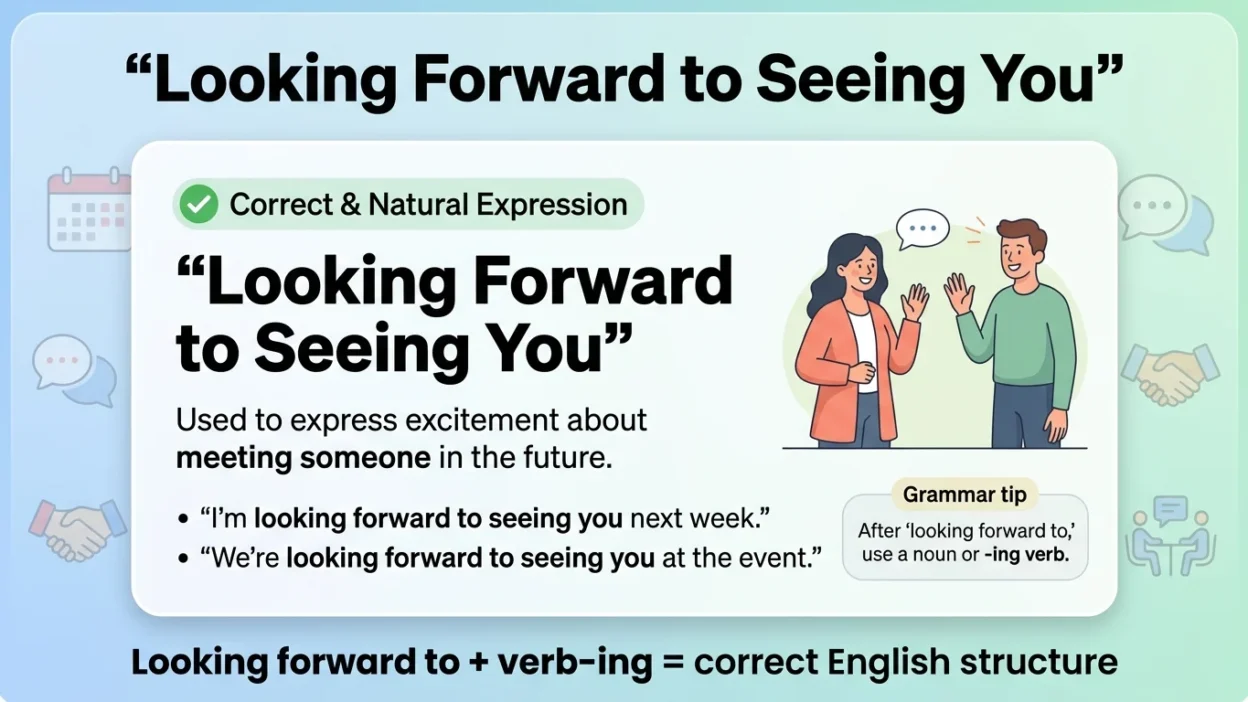
“Looking forward to seeing you” means you are happy and excited about meeting someone in the future. It is a polite and friendly expression commonly used in emails, messages, invitations, and conversations.
Example:
- I’m looking forward to seeing you tomorrow.
- We’re looking forward to seeing you at the event.
The phrase is grammatically correct and widely used in both American and British English.
What Does “Looking Forward to Seeing You” Mean?
The phrase expresses:
- Excitement about a future meeting
- Positive anticipation
- Warmth and friendliness
- Professional courtesy
It tells the other person that their presence matters and that you are genuinely happy about meeting them.
For example:
- Looking forward to seeing you at dinner tonight.
- I’m looking forward to seeing you during the conference next week.
In simple terms, it means:
“I will be happy to meet you soon.”
Why This Phrase Is So Popular
People use this expression because it sounds:
- Polite
- Natural
- Friendly
- Professional
- Emotionally warm
It works well in:
- Business emails
- Job interviews
- Family conversations
- Romantic texts
- Travel plans
- Event invitations
Unlike overly formal phrases, it feels human and sincere.
Is “Looking Forward to Seeing You” Grammatically Correct?
Yes, the phrase is completely correct.
The grammar structure is:
- Looking forward to + noun/pronoun/verb ending in -ing
Since “to” here is part of the phrasal verb “look forward to,” the next verb should use the -ing form.
Correct:
- Looking forward to seeing you.
- Looking forward to meeting you.
Incorrect:
- Looking forward to see you.
- Looking forward to meet you.
This is one of the most common grammar mistakes English learners make.
Examples of “Looking Forward to Seeing You”
Casual Examples
- Looking forward to seeing you this weekend!
- I’m really looking forward to seeing you again.
- Can’t wait — looking forward to seeing you soon.
Professional Examples
- We are looking forward to seeing you at the meeting.
- I’m looking forward to seeing you on Monday.
- Our team is looking forward to seeing you at the conference.
Romantic Examples
- I’ve been counting the days and looking forward to seeing you.
- Looking forward to seeing you tonight ❤️
Friendly Text Messages
- Safe travels! Looking forward to seeing you.
- It’s been too long — looking forward to seeing you soon.
Professional Alternatives to “Looking Forward to Seeing You”
Using alternatives can make your communication feel fresh and more natural.
| Phrase | Tone | Best Use |
| Excited to see you | Casual/Warm | Friends and family |
| Eager to meet you | Professional | Interviews and networking |
| Can’t wait to see you | Informal | Close relationships |
| Anticipating our meeting | Formal | Business emails |
| Happy to see you soon | Friendly | General communication |
| Looking forward to meeting you | Professional | First-time meetings |
| See you soon | Casual | Everyday conversation |
“Looking Forward to Seeing You” vs “Looking Forward to Meeting You”
Many people confuse these two expressions.
| Phrase | Meaning | When to Use |
| Looking forward to seeing you | You already know the person | Friends, coworkers, relatives |
| Looking forward to meeting you | First meeting | Interviews, introductions, clients |
Examples:
- Looking forward to seeing you again next week.
- Looking forward to meeting you in person.
This small difference makes your English sound much more natural.
Common Mistakes to Avoid
Using “to see” Instead of “seeing”
Incorrect:
- Looking forward to see you.
Correct:
- Looking forward to seeing you.
Making It Too Formal in Casual Situations
Sometimes overly formal wording sounds distant.
Too formal:
- I eagerly anticipate our forthcoming interaction.
Natural:
- Looking forward to seeing you soon.
Forgetting Context
Avoid using the phrase in negative or serious situations where excitement may sound inappropriate.
For example:
- Medical emergencies
- Sensitive conversations
- Conflict situations
Tone matters.
American vs British English Differences
The phrase “looking forward to seeing you” is commonly used in both American and British English with almost no difference in meaning.
However, there are slight style differences.
American English
Americans often prefer:
- Can’t wait to see you
- Excited to see you
These sound slightly more casual and enthusiastic.
British English
British speakers may lean toward:
- Looking forward to seeing you
- I look forward to seeing you
These expressions can sound a bit more reserved and polite.
Still, both versions are fully understood everywhere.
Best Situations to Use This Phrase
In Emails
This phrase works perfectly in email closings.
Examples:
- Thank you for your time. Looking forward to seeing you next week.
- We appreciate your support and look forward to seeing you at the event.
Before Events
- Weddings
- Conferences
- Parties
- Family gatherings
- Reunions
In Relationships
It adds warmth and emotional connection.
Example:
- I miss you already and I’m looking forward to seeing you again.
In Customer Service
Businesses use it to sound welcoming.
Example:
- We’re looking forward to seeing you at our store.
How to Reply to “Looking Forward to Seeing You”
Here are natural responses you can use.
Friendly Replies
- Me too!
- Same here!
- Can’t wait!
Professional Replies
- Likewise, see you then.
- I’m looking forward to it as well.
- See you on Tuesday.
Romantic Replies
- I’m counting the hours ❤️
- Looking forward to it too.
Polite Email Examples
Business Email
Thank you for confirming the appointment. I’m looking forward to seeing you on Thursday.
Interview Email
I appreciate the opportunity and look forward to seeing you at the interview.
Client Communication
We value your time and are looking forward to seeing you at the meeting.
These examples sound polished, professional, and friendly.
SEO and Communication Benefits of Positive Language
Positive phrases like looking forward to seeing you help communication feel:
- More human
- More engaging
- More trustworthy
- More emotionally intelligent
In professional communication, warm language often improves:
- Client relationships
- Customer engagement
- Networking success
- Team collaboration
Simple wording creates stronger connections.
FAQs
Is “looking forward to seeing you” formal or informal?
It can be both. The phrase works in casual conversations and professional communication.
Is the phrase grammatically correct?
Yes, it is completely correct English grammar.
Can I say “looking forward to see you”?
No. The correct form is:
- Looking forward to seeing you.
What is a professional alternative?
You can say:
- I look forward to meeting with you.
- Anticipating our meeting.
Can this phrase be romantic?
Yes. Depending on context and tone, it can sound affectionate and caring.
Is it okay in business emails?
Absolutely. It is widely used in professional communication.
What’s the difference between “seeing” and “meeting”?
- Seeing = you already know the person
- Meeting = first-time interaction
Can I use it in text messages?
Yes, it sounds natural and friendly in texts and chats.
Summary
The phrase “looking forward to seeing you” is one of the most natural and widely used expressions in English communication. It conveys warmth, excitement, politeness, and positive anticipation.
If you are writing an email, texting a friend, preparing for a meeting, or talking to someone special, this phrase helps create a friendly and welcoming tone.
Understanding the correct grammar, context, and alternatives can make your English sound more fluent and professional.
Remember to use “seeing” after “looking forward to,” avoid overly formal wording in casual situations, and choose the right variation depending on whether you already know the person or are meeting them for the first time.
The best takeaway is simple: use this phrase genuinely. A warm and natural message leaves a stronger impression than complicated language ever will.