When it comes to talking about mothers in English, many people wonder whether “momma” or “mama” is the correct word. You may have seen both used in text messages, social media captions, songs, family conversations, and even books. At first glance, they seem almost identical, but there are small differences in tone, usage, and regional preference.
If you’ve ever paused while writing a message like “I love you, mama” or “my momma said,” you’re not alone. Understanding the difference between these two affectionate terms can help you sound more natural and confident in both casual and written English.
Quick Answer
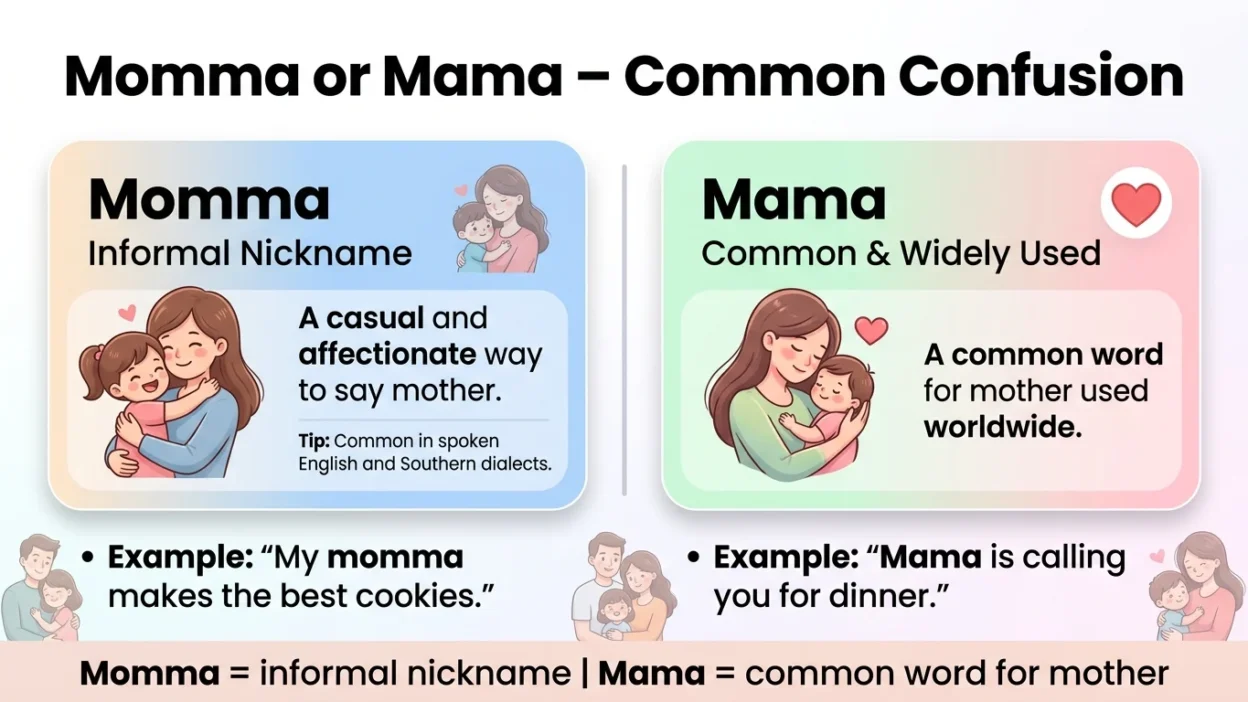
“Mama” is the more common and widely accepted spelling in modern English, especially in American and British English. “Momma” is also correct, but it is more informal, emotional, and often connected with Southern American English or family-centered speech.
- Mama = standard affectionate term for mother
- Momma = warmer, more emotional, and regional variation
Both words mean “mother” and are usually used lovingly.
What Does “Mama” Mean?
“Mama” is a familiar and affectionate word for “mother.” Babies often say it as one of their first words because it is easy to pronounce. Over time, the word became a common nickname for mothers in many cultures and languages.
People use “mama” in:
- Everyday conversations
- Family settings
- Songs and movies
- Social media captions
- Parenting communities
Examples of “Mama”
- “My mama always gives the best advice.”
- “You’re doing great, mama.”
- “I miss you, mama.”
- “That little boy ran straight to his mama.”
The word often expresses:
- Love
- Comfort
- Emotional closeness
- Respect for mothers
What Does “Momma” Mean?
“Momma” has the same meaning as “mama,” but it carries a slightly different tone. It often sounds more personal, emotional, rustic, or Southern.
In many parts of the United States, especially the South, people naturally say “momma” in daily speech.
Examples of “Momma”
- “My momma taught me to be kind.”
- “Listen to your momma.”
- “That’s my momma over there.”
- “A momma’s love is powerful.”
“Momma” is especially common in:
- Southern American English
- Country music
- Informal storytelling
- Emotional family expressions
Momma or Mama: Main Difference
Here is a simple comparison table to help you understand the distinction.
| Feature | Mama | Momma |
| Meaning | Mother | Mother |
| Tone | Standard affectionate | More emotional and informal |
| Popularity | More common worldwide | More regional |
| Common in | American & British English | Southern American English |
| Formal Writing | More acceptable | Less common |
| Emotional Feel | Warm | Very warm and personal |
Which One Is More Correct?
Both “mama” and “momma” are grammatically correct. However, “mama” is generally considered the standard spelling.
If you are writing:
- An academic paper
- Professional content
- A formal article
- Educational material
Then “mama” is usually the safer choice.
If you are writing:
- Dialogue
- Personal stories
- Emotional posts
- Family-related content
Then “momma” can sound more authentic and heartfelt.
American vs British English
There is a small difference in how these words appear in American and British English.
American English
In the United States:
- “Mama” is common nationwide
- “Momma” is strongly associated with Southern dialects and informal speech
- “Mom” is the most common everyday term
Examples:
- “My mama loves gardening.”
- “My momma makes the best pie.”
British English
In British English:
- “Mum” is far more common than both “mama” and “momma”
- “Mama” may appear in older literature or affectionate speech
- “Momma” is rare
Examples:
- “My mum is coming over.”
- “Mama” may be used poetically or affectionately.
Why Do People Use “Momma” Instead of “Mama”?
People often choose “momma” because it feels:
- More emotional
- More personal
- More natural in speech
- More connected to family traditions
It can create a comforting and nostalgic feeling.
For example:
- “My mama said be careful” sounds neutral and sweet.
- “My momma said be careful” sounds more emotional and storytelling-based.
That subtle difference is why many writers and songwriters prefer “momma.”
Common Mistakes People Make
Even native English speakers sometimes misuse these terms. Here are the most common mistakes.
Using Them in Formal Writing
Avoid using “momma” in professional or academic documents unless quoting speech.
Less suitable:
- “My momma influenced my career path.”
Better:
- “My mother influenced my career path.”
Assuming One Is Wrong
Many people believe “momma” is incorrect spelling. That is not true. It is a valid informal variation.
Confusing Regional Usage
“Momma” may sound natural in some American regions but unusual elsewhere. Always think about your audience.
Synonyms and Related Words
There are many affectionate words for mother in English.
Common Alternatives
- Mom
- Mommy
- Mum
- Mother
- Mommy dear
- Ma
- Amma
- Mumma
These terms vary by:
- Region
- Family culture
- Age
- Emotional tone
When Should You Use “Mama”?
Use “mama” when:
- Writing generally for broad audiences
- Creating parenting content
- Speaking affectionately
- Using modern standard English
Example Sentences
- “You’re the best mama ever.”
- “Every mama deserves a break.”
- “A mama’s hug can fix almost anything.”
When Should You Use “Momma”?
Use “momma” when:
- Writing dialogue
- Telling emotional stories
- Reflecting Southern speech
- Creating warm, heartfelt content
Example Sentences
- “My momma always believed in me.”
- “A strong momma raises strong kids.”
- “That little girl looks just like her momma.”
Is “Mama” More Popular Than “Momma”?
Yes. “Mama” is more widely used globally and appears more often in:
- Parenting blogs
- Online articles
- Educational content
- Modern media
“Momma,” however, remains extremely popular in:
- Country music
- Social media captions
- Family quotes
- Southern American culture
Cultural Influence of “Mama” and “Momma”
These words carry deep emotional meaning across cultures. In many languages, similar sounds are used for mothers because babies naturally produce “ma” sounds early in speech development.
You’ll hear related forms worldwide:
- Mama
- Mamma
- Amma
- Mamá
This universal connection makes the word feel comforting and emotionally powerful.
Examples in Everyday Conversation
Here are some natural examples showing how people use both words.
Using “Mama”
- “Hey mama, how was your day?”
- “She’s a proud mama of three.”
- “New mama support groups are growing online.”
Using “Momma”
- “My momma warned me about that.”
- “Country songs often mention momma.”
- “That momma bear energy is real.”
FAQs
Is “momma” a real word?
Yes, “momma” is a real and accepted informal English word meaning “mother.”
Which spelling is more common: mama or momma?
“Mama” is more common in general English usage.
Is “momma” slang?
Not exactly. It is informal and regional, but it is not considered slang.
Do Americans say “momma”?
Yes, especially in Southern American English and emotional family conversations.
Is “mama” formal?
“Mama” is still informal, but it is more acceptable in broader writing contexts than “momma.”
Which word sounds more affectionate?
Many people feel “momma” sounds slightly warmer and more emotional.
Can I use both interchangeably?
Yes, in most casual situations they can be used interchangeably.
Why do songs often use “momma”?
Because “momma” sounds emotional, rhythmic, and personal, making it popular in music lyrics and storytelling.
Summary
The difference between “momma” and “mama” is mostly about tone, style, and regional preference rather than meaning. Both words lovingly refer to a mother, but “mama” is the more standard and widely accepted version, while “momma” feels more emotional, personal, and Southern in flavor.
Choosing the right word depends on your audience and purpose. Use “mama” for general writing and broad readability, and use “momma” when you want warmth, personality, or emotional storytelling. Both carry love, comfort, and family connection at their core.
Actionable Takeaway
If you are unsure which spelling to use, choose “mama” for safe, universal understanding. Use “momma” when you want your writing to sound deeply personal, affectionate, or conversational.
The best choice is the one that matches your tone, audience, and emotional message naturally.