Life is full of moments where we want to relax, smile, and make memories. In everyday English, two common expressions people often use are “have fun” and “enjoy.” While they may seem similar, they are used in slightly different ways depending on the situation, tone, and context.
Many English learners and even native speakers sometimes wonder whether they should say “have fun” or “enjoy” in conversations, emails, or social situations. Understanding the difference can help you sound more natural, confident, and fluent in English communication.
Quick Answer
“Have fun” and “enjoy” are both used to express pleasure or happiness, but they are used differently.
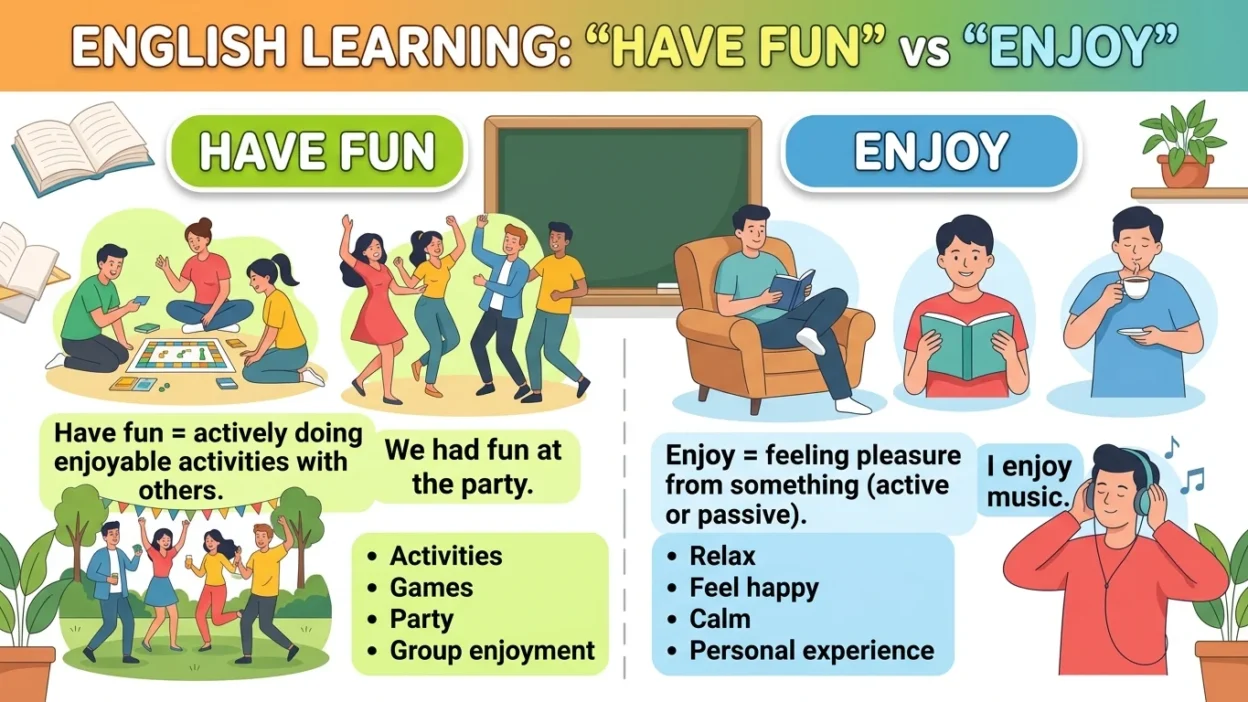
- Have fun is usually an informal phrase used to wish someone a good time.
- Enjoy is more flexible and can describe taking pleasure in an activity, object, experience, or moment.
Example:
- “Have fun at the party!” ✅
- “Enjoy your meal!” ✅
Both are correct, but the context changes the meaning and tone.
What Does “Have Fun” Mean?
The phrase “have fun” means to experience enjoyment, amusement, or happiness while doing something. It is commonly used in casual conversations.
People often say it when someone is going somewhere exciting or participating in an enjoyable activity.
Examples of “Have Fun”
- Have fun at the concert!
- I hope you have fun on your vacation.
- The kids had fun playing outside.
- We always have fun together.
This phrase creates a friendly, warm, and relaxed tone.
What Does “Enjoy” Mean?
The word “enjoy” means to take pleasure in something. Unlike “have fun,” it can be used for activities, food, experiences, hobbies, emotions, and even quiet moments.
It works in both formal and informal English.
Examples of “Enjoy”
- Enjoy your dinner.
- I really enjoy reading books.
- She enjoys spending time with her family.
- Enjoy the movie!
“Enjoy” often sounds smoother and more versatile in professional or polite situations.
Have Fun or Enjoy: Main Difference
Although both expressions relate to happiness and pleasure, they are not always interchangeable.
| Phrase | Meaning | Tone | Common Usage |
| Have Fun | Experience enjoyment during an activity | Casual and friendly | Parties, trips, games, outings |
| Enjoy | Take pleasure in something | Neutral or polite | Meals, hobbies, experiences, events |
Simple Rule
- Use have fun for lively experiences or activities.
- Use enjoy for general pleasure or appreciation.
When to Use “Have Fun”
You should use “have fun” when talking about exciting, social, or entertaining activities.
Common Situations
- Traveling
- Going to parties
- Playing games
- Hanging out with friends
- Family activities
Example Sentences
- Have fun at the beach!
- They had fun during the school trip.
- We had so much fun last weekend.
Related LSI Keywords
- good time
- exciting experience
- enjoyable activity
- amusement
- entertainment
- joyful moments
When to Use “Enjoy”
Use “enjoy” when talking about liking or appreciating something.
Common Situations
- Food and drinks
- Music and movies
- Relaxation
- Hobbies
- Quiet experiences
- Formal wishes
Example Sentences
- Enjoy your coffee.
- I enjoy learning English.
- Please enjoy your stay.
- He enjoys listening to music.
Related Synonyms and NLP Keywords
- appreciate
- like
- take pleasure in
- delight in
- savor
- experience happiness
Can “Have Fun” and “Enjoy” Be Used Together?
Yes, sometimes both can appear in the same conversation naturally.
Example
- “Have fun at the amusement park and enjoy the rides!”
In this sentence:
- “Have fun” refers to the overall experience.
- “Enjoy” refers specifically to the rides.
Using both adds variety and sounds more natural.
Common Mistakes People Make
English learners often confuse these expressions. Here are some common mistakes to avoid.
Saying “Enjoy” Without an Object
Incorrect:
- Enjoy! your trip ❌
Correct:
- Enjoy your trip! ✅
“Enjoy” usually needs an object after it.
Using “Have Fun” in Very Formal Situations
Example:
- “Have fun during the business conference” may sound too casual.
Better:
- “Enjoy the conference.” ✅
Confusing Verb Forms
Incorrect:
- I am enjoy this song. ❌
Correct:
- I am enjoying this song. ✅
Formal vs Informal Usage
Informal English
“Have fun” is more common among friends and family.
Examples:
- Have fun tonight!
- We had fun at the mall.
Formal English
“Enjoy” works better in polite or professional settings.
Examples:
- Enjoy your stay at the hotel.
- We hope you enjoy the presentation.
American vs British English Differences
Both American and British English use “have fun” and “enjoy” similarly. However, there are small style differences.
American English
Americans commonly use:
- Have fun!
- Enjoy!
Very casual and conversational.
British English
British speakers may slightly prefer:
- Enjoy yourself.
- Hope you enjoy it.
The tone can sound a bit more reserved or polite compared to American English.
Everyday Examples in Real Conversations
At a Restaurant
- Enjoy your meal!
- I hope you enjoy the dessert.
Before a Trip
- Have fun in Dubai!
- Enjoy your vacation.
During a Celebration
- Have fun at the wedding!
- Enjoy the music and dancing.
At Work
- Enjoy the seminar.
- Have fun at the team-building event.
Why Understanding the Difference Matters
Using the correct phrase helps you:
- Sound more fluent
- Improve conversational English
- Communicate naturally
- Avoid awkward wording
- Build confidence in speaking and writing
Small language details can make a big difference in how polished your English sounds.
Tips to Remember Easily
Here are simple memory tricks:
Use “Have Fun” For:
- Activities
- Adventure
- Entertainment
- Social events
Use “Enjoy” For:
- Food
- Experiences
- Hobbies
- Relaxation
- Formal wishes
Easy Memory Trick
Think:
- Fun = action
- Enjoy = feeling
FAQs
Is “have fun” the same as “enjoy”?
Not exactly. Both express happiness, but “have fun” focuses more on exciting activities, while “enjoy” is broader and more flexible.
Can I say “enjoy your party”?
Yes, you can. However, “have fun at the party” sounds more natural in casual conversation.
Which phrase is more formal?
“Enjoy” is generally more formal and polite than “have fun.”
Can “enjoy” be used alone?
Sometimes yes. People often simply say:
- Enjoy!
But grammatically, it usually works best with an object.
Is “have fun” grammatically correct?
Yes, absolutely. It is a very common and natural English expression.
What is the best phrase for vacations?
Both work:
- Have fun on your trip!
- Enjoy your vacation!
Do native speakers use both phrases often?
Yes. Both are extremely common in daily English conversations.
Which is better for professional settings?
“Enjoy” is usually safer and more professional.
Final Summary
The phrases “have fun” and “enjoy” both express happiness and pleasure, but they are used differently depending on context. “Have fun” is casual, energetic, and commonly connected to activities, trips, or social events. “Enjoy,” on the other hand, is more flexible and suitable for both casual and formal situations.
Learning the difference helps your English sound smoother, clearer, and more natural. If you are speaking with friends, writing emails, or improving your communication skills, understanding when to use each expression will make your conversations feel more confident and authentic.
Actionable Takeaway
The next time someone goes to a party, say:
- “Have fun!”
When someone is eating, relaxing, or experiencing something pleasant, say:
- “Enjoy!”
Practice both phrases in everyday conversations to improve your fluency and sound more like a natural English speaker.

Henry Wyatt is the administrator of RizzPeak, responsible for managing site operations, content organization, and overall performance. He ensures smooth functionality, platform security, and a user-friendly experience while supporting the site’s creative direction and maintaining consistent quality across all features and updates.