Have you ever paused while writing or speaking and wondered whether “I didn’t do nothing” or “I didn’t do anything” is correct? You’re not alone. This is one of the most common grammar questions in English because both phrases seem to express the same idea at first glance.
The confusion comes from something called a double negative, which can completely change the meaning of a sentence depending on the context. In this guide, you’ll learn the difference between these expressions, when to use them, common mistakes to avoid, and how native speakers use them in everyday conversations.
Quick Answer
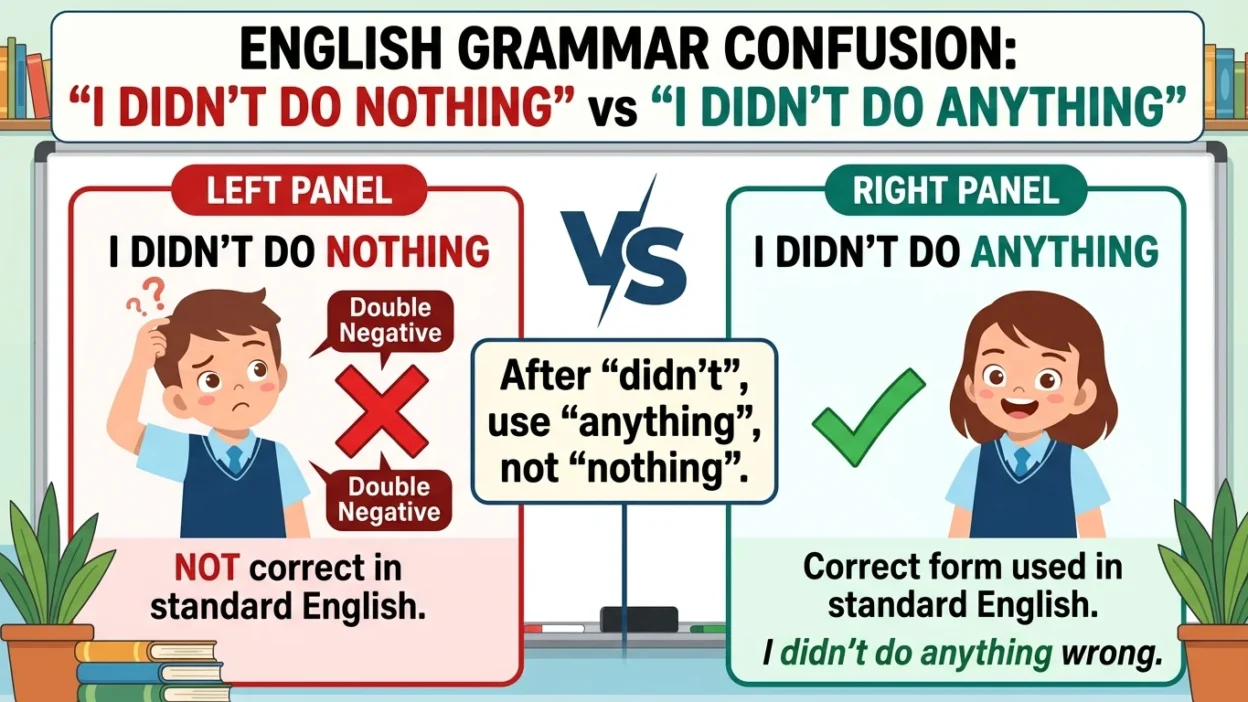
“I didn’t do anything” is the grammatically correct phrase in standard English.
- ✅ I didn’t do anything. (Correct)
- ❌ I didn’t do nothing. (Incorrect in standard English)
The phrase “I didn’t do nothing” contains a double negative, which technically means the opposite of what most speakers intend. However, it may appear in some dialects and informal speech.
What Does “I Didn’t Do Anything” Mean?
The phrase “I didn’t do anything” means that you did not perform any action.
Examples:
- I didn’t do anything wrong.
- I didn’t do anything to upset her.
- I didn’t do anything during the weekend.
In standard English grammar, when a sentence already contains the negative word “didn’t,” you should use “anything” instead of another negative word.
This structure is accepted in academic writing, professional communication, and everyday conversation.
What Does “I Didn’t Do Nothing” Mean?
The phrase “I didn’t do nothing” contains two negatives:
- didn’t
- nothing
In traditional English grammar, two negatives cancel each other out. Therefore, the literal meaning becomes:
I did something.
This is why grammar teachers often mark this phrase as incorrect in formal writing.
However, some regional dialects and informal varieties of English use double negatives for emphasis rather than cancellation.
For example:
- I didn’t do nothing!
- We don’t need no help.
In these cases, speakers usually mean the opposite of the literal grammatical interpretation.
I Didn’t Do Nothing vs I Didn’t Do Anything
| Phrase | Grammar Status | Meaning | Formal Writing |
| I didn’t do anything | Correct | No action was performed | ✅ Yes |
| I didn’t do nothing | Nonstandard | Usually intended to mean no action, but grammatically suggests the opposite | ❌ No |
For professional, academic, and business communication, always choose “I didn’t do anything.”
Why Is “I Didn’t Do Anything” Correct?
Standard English follows a rule that generally allows only one negative element in a sentence when expressing a negative idea.
Consider these examples:
- I don’t have anything.
- She didn’t see anyone.
- We can’t find anywhere to park.
Notice that after the negative verb (don’t, didn’t, can’t), words like anything, anyone, and anywhere are used instead of nothing, nobody, or nowhere.
This grammatical structure keeps the meaning clear and correct.
Examples of Correct Usage
Here are some natural examples using “I didn’t do anything.”
- I didn’t do anything suspicious.
- I didn’t do anything that would cause trouble.
- I didn’t do anything wrong at work.
- I didn’t do anything to deserve that reaction.
- I didn’t do anything all day because I was tired.
These examples sound natural and are accepted in both spoken and written English.
Examples of Incorrect Usage
These examples contain double negatives in standard English:
- ❌ I didn’t do nothing.
- ❌ She didn’t say nothing.
- ❌ We don’t need no advice.
- ❌ He can’t find nowhere to park.
Correct versions:
- ✅ I didn’t do anything.
- ✅ She didn’t say anything.
- ✅ We don’t need any advice.
- ✅ He can’t find anywhere to park.
Common Mistakes English Learners Make
Many English learners accidentally use double negatives because similar structures exist in their native languages.
Common mistakes include:
- I don’t know nothing.
- I didn’t see nobody.
- We don’t have no money.
- She can’t find nowhere.
Correct forms are:
- I don’t know anything.
- I didn’t see anybody.
- We don’t have any money.
- She can’t find anywhere.
Remember this simple rule:
If the verb is already negative, use “any” words instead of another negative word.
When Is “I Didn’t Do Nothing” Acceptable?
Although it is considered nonstandard grammar, you may hear “I didn’t do nothing” in:
- Casual conversations
- Regional dialects
- Song lyrics
- Movies and television shows
- Literary dialogue
Writers sometimes use double negatives to reflect authentic speech patterns or emphasize emotion.
For example:
- “I didn’t do nothing, officer!”
- “We ain’t got no choice.”
These expressions may sound natural within a particular dialect but should generally be avoided in formal situations.
American English vs British English
The grammar rule regarding double negatives is largely the same in both American and British English.
American English
In standard American English:
- ✅ I didn’t do anything.
- ❌ I didn’t do nothing.
Double negatives may appear in regional speech, especially for emphasis.
British English
In standard British English:
- ✅ I didn’t do anything.
- ❌ I didn’t do nothing.
However, certain regional dialects across the UK may also use double negatives in everyday conversation.
So regardless of whether you’re writing for an American or British audience, “I didn’t do anything” remains the safest and most correct choice.
Easy Trick to Remember the Difference
Use this simple formula:
Negative Verb + Any Word = Correct
Examples:
- Didn’t + anything
- Don’t + anyone
- Can’t + anywhere
Avoid:
Negative Verb + Negative Word
Examples:
- Didn’t + nothing
- Don’t + nobody
- Can’t + nowhere
This shortcut can help you avoid many common grammar mistakes.
Similar Grammar Pairs
You may encounter other confusing pairs that follow the same rule.
Didn’t See Anybody vs Didn’t See Nobody
- ✅ I didn’t see anybody.
- ❌ I didn’t see nobody.
Don’t Have Anything vs Don’t Have Nothing
- ✅ I don’t have anything.
- ❌ I don’t have nothing.
Can’t Find Anywhere vs Can’t Find Nowhere
- ✅ I can’t find anywhere.
- ❌ I can’t find nowhere.
Learning these patterns will improve your grammar and make your English sound more natural.
FAQs
Is “I didn’t do nothing” grammatically correct?
No. In standard English, it is considered incorrect because it contains a double negative.
Why do people say “I didn’t do nothing”?
Many speakers use it in informal speech, regional dialects, or for emphasis, even though it is not standard grammar.
Which phrase should I use in writing?
Use “I didn’t do anything.” It is grammatically correct and appropriate for all formal situations.
Is “I didn’t do nothing” ever acceptable?
It can be acceptable in dialogue, song lyrics, or dialect-based speech where authenticity is more important than standard grammar rules.
Do double negatives always make a sentence wrong?
In standard English, double negatives are generally considered incorrect. However, some dialects use them as a normal grammatical feature.
Is the rule different in British English?
No. Standard British English and standard American English both prefer “I didn’t do anything.”
What is a double negative?
A double negative occurs when two negative words appear in the same clause, such as “didn’t” and “nothing.”
How can I avoid this mistake?
If your sentence already contains a negative verb like don’t, didn’t, can’t, or won’t, use words such as anything, anyone, and anywhere instead of additional negatives.
Summary
The difference between “I didn’t do nothing” and “I didn’t do anything” comes down to standard English grammar. The phrase “I didn’t do anything” is the correct and widely accepted form because it uses a single negative structure. It clearly communicates that no action was taken and is appropriate in both spoken and written English.
While “I didn’t do nothing” may appear in regional dialects, casual conversations, music, and fictional dialogue, it is generally considered a double negative and should be avoided in formal communication.
When in doubt, choose “I didn’t do anything” to ensure your message is grammatically correct and easy to understand.
Actionable Takeaway
Before using words like nothing, nobody, or nowhere, check whether your sentence already contains a negative verb such as didn’t or don’t. If it does, switch to anything, anybody, or anywhere to create a grammatically correct sentence every time.

Henry Wyatt is the administrator of RizzPeak, responsible for managing site operations, content organization, and overall performance. He ensures smooth functionality, platform security, and a user-friendly experience while supporting the site’s creative direction and maintaining consistent quality across all features and updates.